Introduction
Mining dump trucks operate under demanding conditions. They carry heavy loads across uneven haul roads, where repeated impacts, vibration, and changes in ground conditions place considerable stress on the vehicle’s chassis and suspension system.
A suspension system helps manage these forces by absorbing road impacts and controlling the movement between the wheels and the vehicle body. For ultra-class mining trucks, conventional mechanical springs may not provide the load support and damping characteristics required for such heavy-duty applications.
This is where a hydro-pneumatic suspension system becomes important. By combining compressed nitrogen gas with hydraulic fluid, this system provides both spring action and shock absorption. Understanding how it works, what components it contains, and how these components interact can help equipment operators and spare parts buyers make better maintenance and replacement decisions.
1. What Is a Hydro-Pneumatic Suspension System?
A hydro-pneumatic suspension system is a suspension arrangement that uses gas and hydraulic fluid to support vehicle weight and absorb external impacts.
Unlike a conventional suspension system that relies on steel springs, a hydro-pneumatic design uses compressed nitrogen as its spring medium. Hydraulic fluid transfers force within the cylinder and helps control suspension movement.
The two main working media have different functions:
- Nitrogen gas: Provides the elastic force needed to support the vehicle and absorb changes in suspension load.
- Hydraulic fluid: Transfers pressure and creates resistance to movement, helping control oscillation and reduce the effects of sudden impacts.
These two elements work together inside the suspension cylinder. When the vehicle encounters an uneven surface, the suspension responds to changes in load and movement, helping maintain contact between the tires and the ground.
This arrangement is particularly relevant to heavy mining vehicles, where suspension components must accommodate substantial vehicle weight and repeated loading conditions.
2. How Does a Hydro-Pneumatic Suspension System Work?
The operating principle is based on the compression of nitrogen gas and the movement of hydraulic fluid inside the suspension cylinder.
The working process can be understood through three main stages.
2.1 Supporting the Vehicle Load
When the mining truck is stationary or carrying a load, the vehicle’s weight acts on the suspension cylinder.
Hydraulic fluid inside the cylinder transmits the applied force to the nitrogen chamber. As the gas becomes compressed, it generates a restoring force that supports the vehicle.
As the load changes, the nitrogen pressure and suspension position respond accordingly. This allows the system to accommodate different operating loads without relying entirely on rigid mechanical springs.
2.2 Absorbing Impacts During Operation
When a mining dump truck travels over rocks, potholes, or uneven haul roads, external forces cause the suspension to compress.
During compression, the piston moves inside the cylinder, displacing hydraulic fluid and compressing the nitrogen gas. The gas stores energy, while hydraulic resistance helps control the speed of suspension movement.
This combination reduces the direct transmission of road impacts to the chassis and helps improve vehicle stability during heavy-duty operation.
2.3 Returning to the Normal Position
After the external impact decreases, the compressed nitrogen expands and generates a restoring force.
This force helps move the piston back toward its original position. Hydraulic resistance controls the return movement, reducing excessive bouncing and repeated oscillation.
The cycle continues as the truck travels across different road surfaces and encounters changing loads.
3. What Are the Main Components of a Hydro-Pneumatic Suspension System?
A hydro-pneumatic suspension cylinder contains several structural, guiding, sealing, and pressure-related components. Each part contributes to the cylinder’s ability to support loads and control movement.
3.1 Cylinder Tube and Piston Rod
The cylinder tube forms the main outer housing of the assembly. It contains the internal working components and provides the structure for hydraulic operation.
The piston rod connects the moving piston assembly to the vehicle’s suspension structure. Its movement allows the cylinder to respond to compression and extension forces.
Both components are important to the mechanical integrity of the suspension cylinder.
3.2 Piston and Guide Rings
The piston moves within the cylinder and helps manage the movement of hydraulic fluid.
Guide rings and support rings help maintain alignment between moving components. They also reduce direct contact between metal surfaces during operation.
Proper guidance is important because misalignment can contribute to uneven wear and affect the movement of the cylinder.
3.3 Hydraulic Seals and Dust Protection Components
Sealing components help prevent hydraulic fluid leakage and protect the internal working area from external contamination.
Common component types include:
- O-rings
- Primary shaft seals
- PTFE step seals
- Backup rings
- Dustproof washers
- Dirt-proof rings
These parts serve different sealing and protection functions. Their condition can influence the reliability of the hydraulic cylinder.
For maintenance teams sourcing hydraulic cylinders seal kits, it is important to check the application, dimensions, and corresponding part numbers rather than selecting a kit based only on general appearance.
3.4 Nitrogen Charging Valves
Nitrogen charging valves provide access for filling or adjusting the nitrogen charge.
Maintaining the specified gas charge is important because nitrogen pressure directly affects the suspension’s load-supporting characteristics.
Charging and servicing should follow the applicable equipment maintenance procedures.
4. What Should Buyers Know About Hydraulic Suspension Parts?
Selecting suitable replacement components requires more than identifying a general product category. Equipment model compatibility, component specifications, and part numbers all matter.
4.1 Confirm Equipment Compatibility
Different mining trucks may use different suspension arrangements and component dimensions.
For example, a hydraulic cylinder for excavator applications should not automatically be considered interchangeable with a mining dump truck suspension cylinder. Even when two components share similar hydraulic principles, their designs and mounting requirements may differ.
Buyers should confirm the equipment model and original part number before placing an order.
4.2 Check the Required Replacement Components
Some maintenance requirements involve replacing the complete cylinder assembly, while others involve repairing specific internal components.
Depending on the condition of the assembly, buyers may need a cylinder tube, piston rod, guide rings, sealing components, or a complete seal kit.
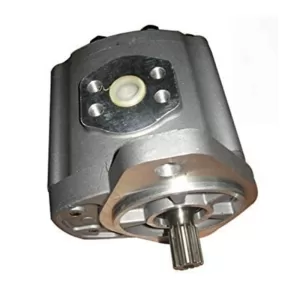
It is also important to distinguish suspension cylinders from other hydraulic system parts, such as hydraulic pumps and control components.
A hydraulic pump supplies hydraulic power to the circuits it serves, while a hydro-pneumatic suspension cylinder uses nitrogen and hydraulic fluid to provide load support and damping. These components have different functions and should be evaluated according to their respective applications.
When sourcing hydraulic pump components or other heavy equipment parts alongside suspension components, buyers should verify each item’s individual application and part number.
4.3 Compare Complete Assemblies and Individual Parts
A complete assembly can be suitable when the entire cylinder requires replacement.
For maintenance and rebuilding work, purchasing individual internal components may be more appropriate, depending on the cylinder’s condition and repair requirements.
The decision should be based on the required repair scope, component availability, and compatibility with the original assembly.
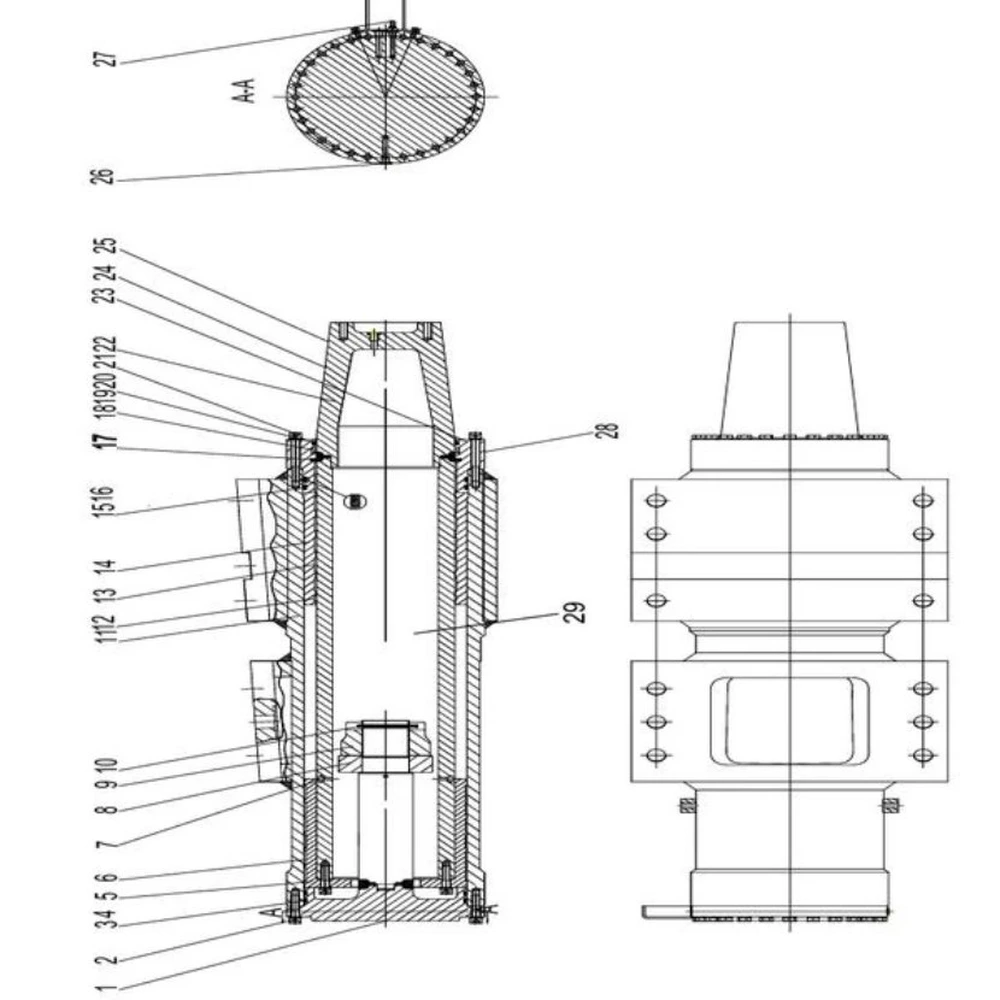
5. 330106918 Front Suspension Cylinder for XCMG XDE130
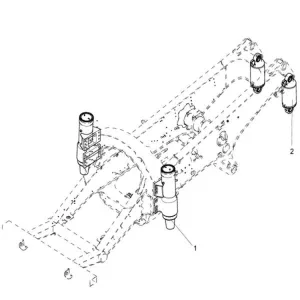
For buyers sourcing front suspension components for the XCMG XDE130 electric driving dump truck, the 330106918 Front Suspension Cylinder is a dedicated replacement assembly.
Also identified as a front hydro-pneumatic strut, this component is designed for the vehicle’s front axle and serves suspension load-support and damping functions.
Main Product Information
| Attribute | Specification |
| Assembly Part Number | 330106918 |
| Product Name | Front Suspension Cylinder |
| Component Type | Hydro-Pneumatic Shock Strut |
| Compatible Brand | XCMG |
| Applicable Machine | XDE130 Electric Driving Dump Truck |
| Assembly Components | 29 parts |
Main Internal Components
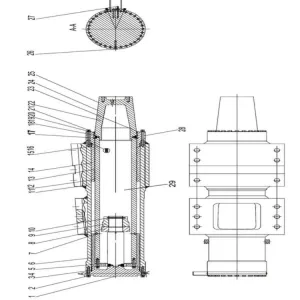
The 29-part assembly includes the following key components:
- Cylinder Base: 914901188
- Piston: 914901189
- Cylinder Tube: 914901193
- Piston Rod: 914901198
- Sleeve Guide: 914901192
- Gland: 914901227
- Nitrogen Charging Valve: 800937813
- DE110_10_2 Seal Kit: 914901187
The complete parts breakdown also includes O-rings, support rings, dust seals, backup rings, washers, screws, and other assembly components.
Buyers can refer to the corresponding part numbers when identifying replacement requirements.
Complete Assembly and Individual Replacement Parts
For different maintenance requirements, both complete assembly and individual internal components are available.
The complete 330106918 front suspension cylinder is an option for full assembly replacement. Individual components, including the cylinder tube, piston rod, and seal kit, are also available for specialized repair and rebuilding work.
Genuine XCMG OEM and high-quality aftermarket options are offered, allowing buyers to select according to their equipment requirements and procurement needs.
Conclusion
A hydro-pneumatic suspension system combines compressed nitrogen and hydraulic fluid to support vehicle loads, absorb impacts, and control suspension movement. Its performance depends on the coordinated operation of structural components, guiding elements, seals, and nitrogen charging valves.
For mining equipment maintenance teams and spare parts distributors, understanding these components helps improve replacement part identification and purchasing decisions.
If you are sourcing the 330106918 Front Suspension Cylinder or its internal components for an XCMG XDE130 dump truck, contact the cnForce team to confirm part number compatibility, available replacement options, and quotation details.
FAQs
1. What is the main function of a hydro-pneumatic suspension system?
It uses compressed nitrogen and hydraulic fluid to support vehicle loads, absorb road impacts, and control suspension movement.
2. What are the main components of a hydro-pneumatic suspension cylinder?
The main components include the cylinder tube, piston rod, piston, guide rings, hydraulic seals, and nitrogen charging valve.
3. Which suspension cylinder fits the XCMG XDE130 mining dump truck?
The 330106918 Front Suspension Cylinder is designed for the XCMG XDE130 electric driving dump truck. Buyers can also source individual internal components using the corresponding part numbers.