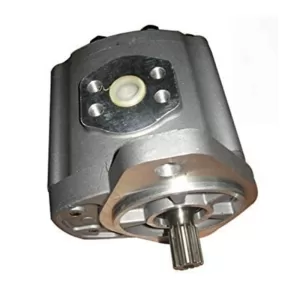
Heavy-duty equipment — articulated dump trucks, excavators, wheel loaders, and mining haulers — earns its keep through continuous, high-load operation. The cost of keeping this machinery running is a line item that fleet managers and maintenance directors watch closely, and no component draws more attention than the hydraulic pump.
Hydraulic systems are the muscle of modern mobile equipment. They steer the machine, lift and tip the dump body, drive attachments, and hold components in position under enormous forces. When a pump fails, the machine stops. Downtime in a mining or construction operation is rarely measured in hours of lost output alone; it cascades into missed delivery windows, idle operators, and expedited parts freight. Controlling hydraulic pump maintenance cost is therefore not a back-office exercise — it is a direct lever on equipment availability and operating profit.
This article explains the real drivers behind hydraulic maintenance expense and offers a practical, field-tested approach to lowering it. The opening sections are purely educational, so that maintenance teams can apply the logic to any fleet, regardless of brand or model.
Why Hydraulic Pump Maintenance Costs So Much
To reduce a cost, it helps to understand precisely where the money goes. Hydraulic pump maintenance expense tends to concentrate in a handful of predictable places.
Unscheduled failure. The most expensive repair is the one nobody planned for. A pump that seizes mid-shift forces a machine out of production immediately, and the urgency itself inflates the cost: expedited shipping, overtime labor, and sometimes the purchase of a complete assembly when only one internal part has failed.
Contamination-related wear. Hydraulic oil carries microscopic particles, and a pump operating at thousands of PSI turns those particles into abrasives. Contaminated fluid scores pistons, wears camshaft lobes, and degrades seals well before their design life. The resulting failures are gradual and silent — right up until they are not.
Seal and O-ring deterioration. Elastomer seals live at the interface of heat, pressure, and chemical attack from hot hydraulic fluid. A single degraded O-ring can cause an external leak, which drops system pressure, which in turn forces the pump to work harder to hold load — accelerating wear across the entire circuit.
Misaligned or poorly calibrated assembly. High-pressure pumps depend on precise internal clearances. Excessive end-play in a drive shaft causes the gear to mesh unevenly, generating backlash, vibration, and premature wear on both the pump and the engine gear train it connects to.
Ignored early warning signs. Whining noises, slow response, overheating, and slight pressure drops are all early signals. When they are ignored, a modest repair becomes a full replacement.
Each of these drivers is, to a meaningful degree, controllable. The maintenance practices below target them directly.
What Determines the Life of a Hydraulic Pump
A hydraulic pump’s service life is rarely a fixed number. It is the outcome of three factors that operators control more than they often realize.
Fluid cleanliness. The single most influential variable. Clean, dry, well-filtered oil can roughly double the life of a pump compared with contaminated fluid. Routine oil sampling and particle-count testing are inexpensive relative to the failures they prevent.
Operating temperature. Heat accelerates both oxidation of the fluid and hardening of seals. Keeping oil within the manufacturer’s specified temperature range — through clean coolers, proper reservoir levels, and correct viscosity — preserves the elastomers that keep pressure where it belongs.
Installation quality. How a pump is mounted, aligned, and primed at the moment of installation sets the trajectory for everything that follows. A rushed installation that skips air bleeding or end-play calibration can undo years of otherwise good maintenance in a single shift.
Practical Steps to Lower Hydraulic Pump Maintenance Costs
Establish a fluid-condition program. Sample the oil on a fixed interval and track particle counts, moisture, and viscosity against baselines. Change filters on schedule, and investigate — rather than ignore — any upward trend in contamination. Clean oil is the cheapest insurance available.
Address leaks immediately. A weeping fitting or a damp casing is a symptom, not a cosmetic issue. Trace every leak to its source, replace the worn seal, and restore the system to full pressure. External leaks invite contamination in while letting performance out.
Renew seals and O-rings during every overhaul. Seals are consumables. During any pump service, replace all gaskets, O-rings, and shaft seals as a matter of routine, regardless of how they look. A seal that has spent its life under heat and pressure is already partway to failure, and the marginal cost of replacing it is trivial compared with the cost of a post-repair leak.
Calibrate internal clearances carefully. During assembly, verify end-play and gear-mesh clearances to specification. Correct calibration eliminates backlash and vibration, which are silent destroyers of both the pump and the drive train it mounts to.
Bleed air from the system before load. Air pockets in high-pressure lines cause localized cavitation and pressure shocks that can damage internal pistons. After any installation or service, purge the supply and return lines before running the system under full load.
Keep service records per machine. Log every repair, seal replacement, fluid change, and adjustment against each individual machine. Patterns emerge from records — a pump that fails every season, a seal that leaks after a fixed number of hours — and those patterns are what turn reactive maintenance into preventive maintenance.
Stock critical replacement parts in advance. For the highest-utilization machines, holding a small inventory of the fast-moving wear items — shafts, alignment shims, seals, and retaining rings — eliminates the single largest cost amplifier: waiting for a part while the machine sits idle.
How the Hydraulic Pump Is Built — and Why It Matters for Maintenance
Understanding what is inside a pump makes every maintenance decision more sensible. While designs vary, an engine-driven open plunger pump — the type commonly used for high-pressure steering and auxiliary circuits on articulated haulers — illustrates the general principle well.
At the heart of such a pump is a camshaft, the main drive component that converts rotational torque from the engine’s auxiliary gear train into the linear reciprocating movement that drives the high-pressure pistons. Because the camshaft does the mechanical heavy lifting, its lobes are typically machined from high-tensile alloy steel and hardened. When maintenance teams speak of “pump wear,” the camshaft lobes are often the first place they look.
Supporting the camshaft is a set of smaller but equally critical parts. An adjusting shim is used to calibrate the camshaft’s end-play during assembly, ensuring that the drive gear meshes smoothly without creating backlash in the gear case. A retainer ring secures the shaft bearing in position, and a high-temperature O-ring seals the casing flange against high-pressure fluid leaks. Each of these components is inexpensive on its own; each is also capable of taking the entire pump offline if it fails.
This internal structure is why the maintenance practices above matter. The camshaft rewards clean oil and correct calibration; the seals and O-ring reward cool operation and routine renewal; the shim and retainer ring reward careful, patient assembly. A pump is not a black box to be swapped when it breaks — it is a set of serviceable, individually replaceable parts whose life can be extended through disciplined care.
Choosing Replacement Parts That Protect Your Budget
When a repair is unavoidable, the parts you choose determine whether the fix is a one-time expense or the start of a cycle of recurring failures.
Match the part to the exact machine. High-pressure pumps are matched to specific engine auxiliary gears and mounting interfaces. Verifying the chassis serial prefix or engine identification plate against the part specification before ordering prevents the costly discovery of a wrong spline profile or flange size after the fact.
Weigh genuine versus quality aftermarket options. For critical, close-tolerance components, original equipment parts provide certainty. High-quality aftermarket alternatives, when sourced from a reputable supplier, can deliver comparable service life at a meaningfully lower price. The key is the supplier’s quality control and warranty, not the label on the box.
Order individual components when appropriate. A full pump assembly is not always necessary. When diagnosis points to a single failed shaft, seal, or shim, ordering that individual hydraulic replacement part can save a substantial sum while restoring the pump to full function. This targeted-repair approach is one of the most direct ways to reduce maintenance spend on heavy machinery parts.
Confirm availability and lead time before the machine is down. The cheapest part is the one that arrives before you need it. Working with a supplier that holds stock of genuine and aftermarket options — such as Sany parts for Sany-branded equipment — shortens the window between failure and return to service.
Featured Product: High-Pressure Hydraulic Open Plunger Pump for the Sany SAT40C
For teams maintaining Sany articulated dump trucks, the 60115082 Open Plunger Pump is the engine-driven high-pressure hydraulic pump that powers the machine’s primary steering and hoist circuits. Designed for the Sany SAT40C articulated dump truck, it is a relevant example of how the general principles above translate into a specific, serviceable component.
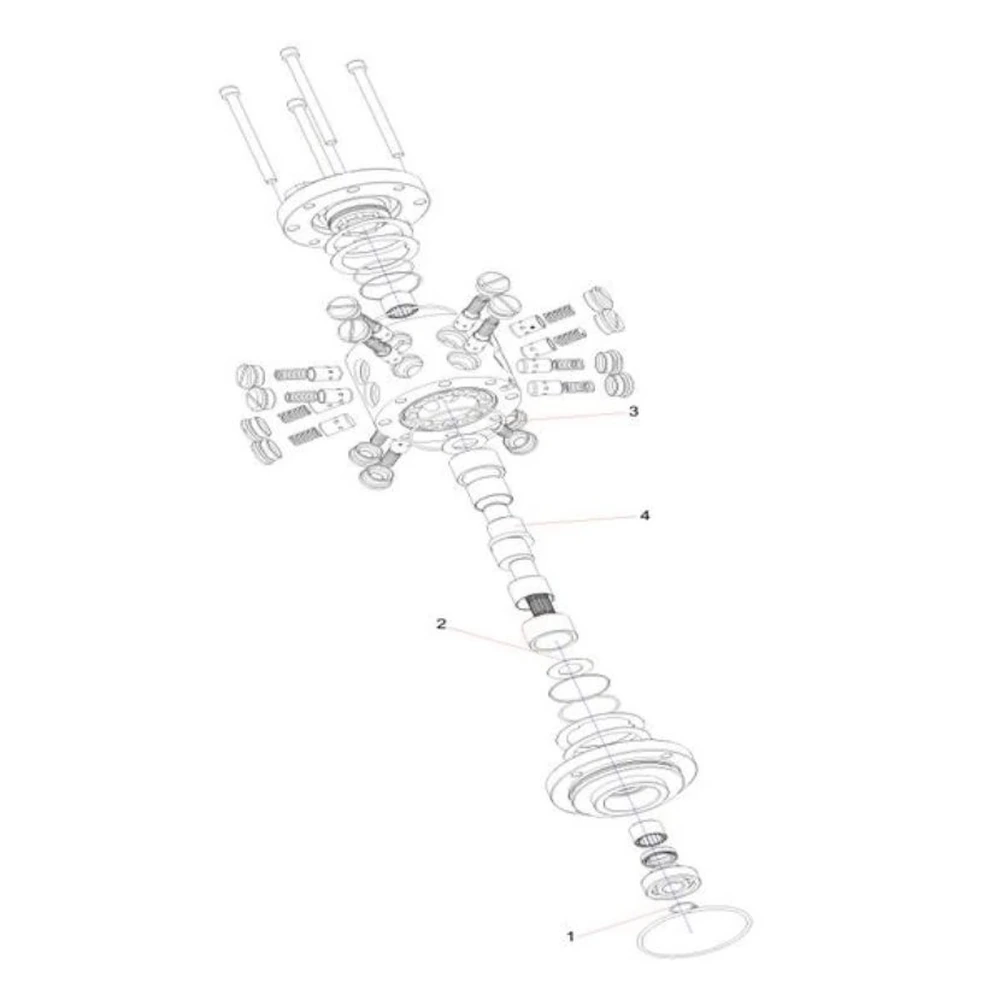
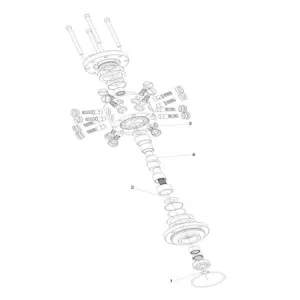
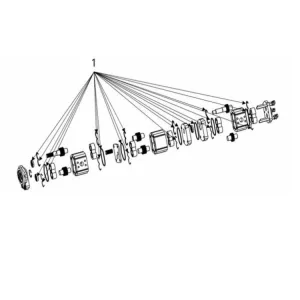
The 60115082 assembly contains a small set of individually replaceable parts that make targeted repair practical. Its main drive Camshaft (60319208) converts engine rotational torque into the linear reciprocating movement that drives the internal high-pressure pistons. An Adjusting Shim A (60319211) calibrates camshaft end-play during assembly so the drive gear meshes smoothly without backlash, while an internal Retainer Ring (A210414000025) secures the shaft bearing and a high-temperature sealing O-ring (60319207) prevents high-pressure external oil leaks.
Because the pump is engine-driven — connected to the Sany auxiliary gear train or Power Take-Off (PTO) port — it delivers steady hydraulic flow independent of vehicle travel speed, which is exactly what low-effort steering and high-speed dump-body tipping demand under continuous load. The complete 60115082 pump assembly is available, and each of the individual hydraulic pump components above can also be ordered separately for targeted field repairs or routine pump overhauls. Both genuine Sany OEM and quality aftermarket options are stocked for rapid international shipping.
Conclusion
Hydraulic pump maintenance cost is not a fixed burden — it is a consequence of how a machine is operated, installed, and serviced. Clean oil, controlled temperature, careful installation, prompt leak repair, and routine seal renewal together prevent the unscheduled failures that dominate most maintenance budgets. When a repair is unavoidable, matching the exact part and choosing the right hydraulic replacement parts — whether a full assembly or a single failed component — keeps the fix affordable rather than punitive.
For the Sany SAT40C articulated dump truck, the 60115082 Open Plunger Pump and its individual components offer a practical path to exactly this kind of controlled, lower-cost maintenance. Contact our B2B sales team today with part number 60115082, your desired quantities, and delivery port to receive a formal commercial quotation within one business day.
Frequently Asked Questions
What are the most common causes of premature hydraulic pump failure?
Contaminated hydraulic oil, excessive operating temperature, degraded O-rings and shaft seals, and incorrect end-play calibration during assembly are the leading causes. Most are preventable through a disciplined fluid-condition and installation routine.
Can I replace just one component instead of the whole pump assembly?
Yes. Pumps like the 60115082 are built from individually replaceable parts — such as the camshaft, adjusting shim, retainer ring, and O-ring — so a targeted repair is often possible when diagnosis points to a single failed component.
Are aftermarket hydraulic parts as reliable as OEM parts?
High-quality aftermarket options from a reputable supplier can deliver service life comparable to OEM parts, typically at a lower price. The deciding factors are the supplier’s quality control, warranty, and whether the part matches the exact machine specification.