Key Takeaways
A planetary transmission is a compact mechanical system that uses a sun gear, planet gears, ring gear, and carrier to transfer power while improving torque distribution.
Compared with many traditional reduction systems, a planetary gear transmission provides high torque density, stable load distribution, and reliable performance in demanding applications.
The selection of a suitable planetary gearbox depends on factors such as equipment type, torque requirements, operating environment, and maintenance conditions.
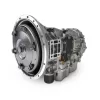
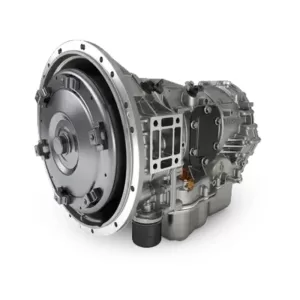
The CAT 8 Speed Planetary Transmission 576-9818 is a replacement transmission component designed for CAT mining bulldozers and heavy-duty working environments.
Proper maintenance and correct component matching help improve transmission reliability and reduce unplanned downtime.
What Is a Planetary Transmission and How Does It Work?
A planetary transmission is a type of mechanical gearbox designed to transfer power while reducing speed and increasing output torque. Unlike conventional gear systems that usually rely on a single gear pair to carry the load, planetary designs use multiple gears working together to distribute mechanical load.
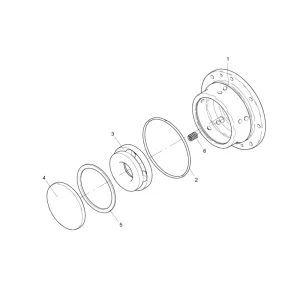
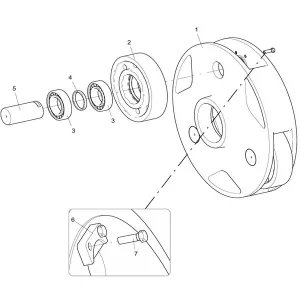
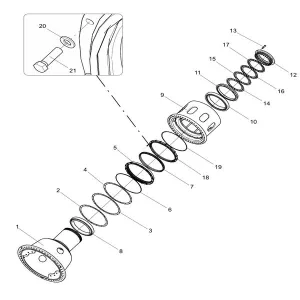
The basic structure includes four main components: the sun gear, planet gears, ring gear, and carrier. The sun gear is positioned at the center, while several planet gears rotate around it and engage with the internal ring gear. The carrier holds the planet gears and transfers the final output movement to the connected equipment.
According to the U.S. Department of Energy, gear systems are widely used in mechanical power transmission applications because they can change speed, torque, and direction while maintaining efficient power transfer. The actual performance depends on the gear design, materials, lubrication, and operating conditions.
Main Components of a Planetary Gear System
| Component | Function |
| Sun Gear | Receives input power and transfers rotation to planet gears |
| Planet Gears | Share the load and transmit torque around the center gear |
| Ring Gear | Provides the internal gear connection for reduction |
| Planet Carrier | Supports planet gears and delivers output torque |
The working principle of a planetary gear transmission allows multiple gear teeth to engage at the same time. This load-sharing structure is one reason why planetary systems are often selected for equipment that requires high torque output within limited installation space.
How Planetary Gear Reduction Works
The reduction process is achieved by controlling the relationship between the sun gear, ring gear, and carrier. Different fixed components create different output speeds and torque levels.
For example:
| Configuration | Main Effect |
| Fixed ring gear | Provides speed reduction and increased torque output |
| Fixed sun gear | Creates different reduction characteristics |
| Fixed carrier | Allows reverse output rotation |
This flexible design makes planetary gear reduction suitable for applications where equipment needs strong torque performance without increasing gearbox size significantly.
Advantages and Key Performance Factors of Planetary Gear Systems
Heavy equipment often operates under changing loads, vibration, and demanding working conditions. For these applications, gearbox design must balance torque capacity, durability, and operating efficiency.
High Torque Density and Compact Structure
The advantages of planetary gear systems are very clear. The housing is compact yet highly load-bearing. Multiple planetary gears share the load, reducing the burden on each tooth. Compared to some traditional structures, this design is more capable of withstanding heavy load tests.
This feature is valuable for mining and construction equipment where installation space is limited but high torque output is required.
Load Distribution and Mechanical Stability
A well-designed planetary gearbox can provide more balanced force distribution because multiple planet gears participate in power transmission.
The main benefits include:
- Better load sharing between gears
- Reduced stress concentration
- Compact transmission structure
- Suitable performance under heavy-duty operation
The actual service life is not fixed; it is affected by factors such as manufacturing quality, lubrication condition, workload, and installation accuracy.
Gear Ratio and Efficiency Considerations
When selecting a planetary system, engineers normally evaluate:
- Required output torque
- Input speed
- Reduction ratio
- Duty cycle
- Environmental conditions
According to the American Gear Manufacturers Association (AGMA), gearbox selection should consider application loads, operating hours, and service factors. This approach helps ensure that the transmission matches real working conditions.
Applications of Planetary Transmission in Heavy Equipment
Planetary transmission systems are widely used in industries that require reliable power transfer and strong torque output. Common applications include construction machinery, mining equipment, industrial drives, and mobile equipment.
Mining and Construction Machinery
Mining equipment operates in environments where components are exposed to:
- Heavy impact loads
- Continuous operation
- Dust and contamination
- High mechanical stress
For these machines, transmission components need to provide consistent power transfer and withstand demanding operating cycles.
Typical applications include:
| Equipment Type | Transmission Application |
| Mining bulldozers | Drive and power transmission systems |
| Excavators | Swing and travel drive systems |
| Loaders | Heavy-duty torque transmission |
| Industrial machinery | Speed reduction and motion control |
Why Heavy Equipment Uses Planetary Systems
Compared with some traditional gear arrangements, planetary designs offer advantages for heavy machinery because of their compact structure and torque capability.
However, selecting the correct transmission requires matching the component with the equipment model, operating requirements, and manufacturer specifications. A gearbox that is suitable for one machine may not be suitable for another application.
How to Select the Right Planetary Gearbox for Heavy Equipment
Choosing the correct transmission component goes beyond simply comparing product names. Engineers and purchasing teams usually evaluate several technical and operational factors before selecting a gearbox.
Step 1: Confirm Equipment Requirements
The first step is identifying the machine requirements, including:
- Equipment manufacturer and model
- Original part number
- Transmission type
- Operating environment
For replacement parts, accurate identification can reduce installation problems and avoid unnecessary downtime.
Step 2: Evaluate Torque and Load Conditions
Heavy machinery often experiences changing loads during operation. The selected gearbox should match the expected working conditions.
Important factors include:
| Selection Factor | Why It Matters |
| Output torque | Determines whether the transmission can handle equipment demands |
| Load condition | Helps evaluate continuous and impact loads |
| Operating hours | Affects durability requirements |
| Environment | Determines protection and maintenance needs |
According to AGMA guidelines, transmission selection should not be based solely on the basic torque rating. It is also necessary to evaluate application conditions and apply the appropriate service factor.
Step 3: Check Compatibility and Replacement Requirements
Before purchasing a replacement transmission component, buyers should confirm:
- Dimensions
- Connection structure
- Equipment application
- Product specifications
This process is especially important for mining equipment because incorrect components may affect machine performance and maintenance efficiency.
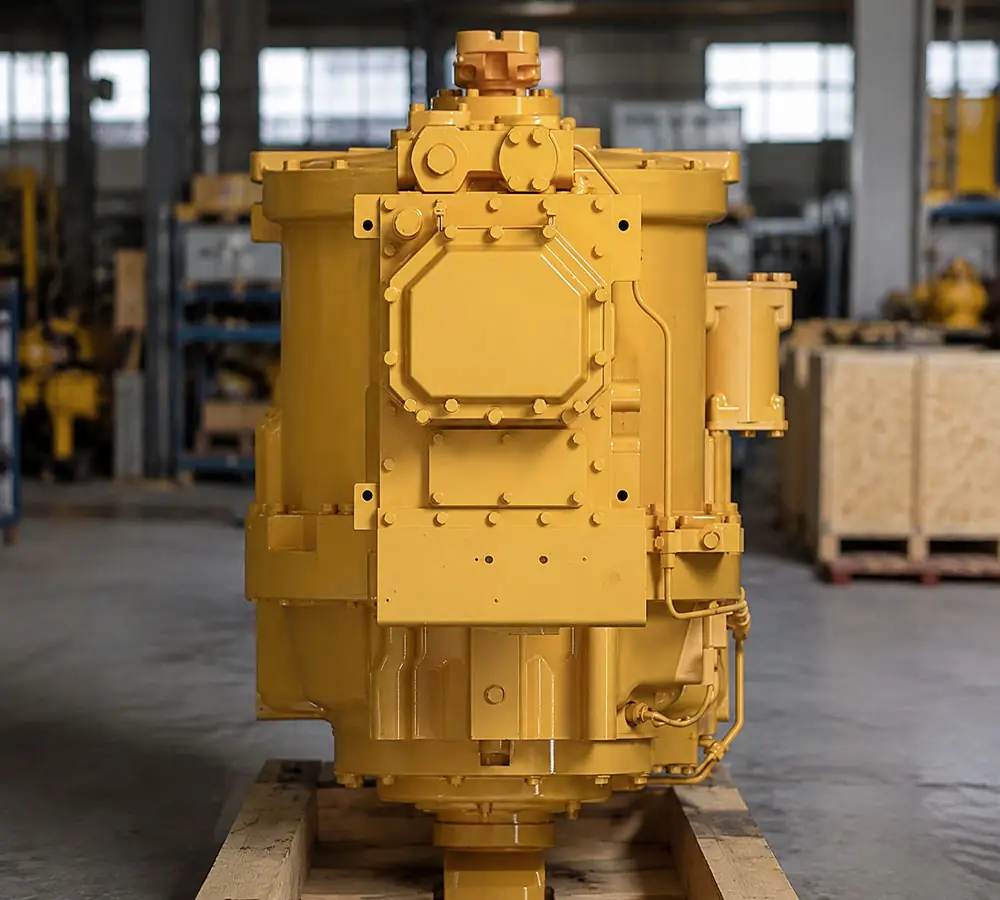
Product Example: 8 Speed Planetary Transmission 576-9818 CAT Spare Parts
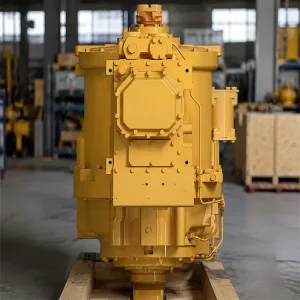
For mining bulldozer transmission applications, the 8 Speed Planetary Transmission 576-9818 CAT Spare Parts is a replacement component designed for CAT mining bulldozer equipment. This product belongs to the planetary transmission category and is developed for heavy-duty machinery environments where reliable power transfer is required.
Unlike general industrial gearboxes, mining equipment transmission components need to operate under challenging conditions, including high mechanical loads, frequent duty cycles, and demanding working environments. Selecting a suitable replacement part requires confirming equipment compatibility, part number accuracy, and application requirements.
Product Specifications
| Item | Description |
| Product Name | 8 Speed Planetary Transmission 576-9818 |
| Application Category | CAT Mining Bulldozers Spare Parts |
| Product Type | Planetary Transmission Assembly |
| Equipment Field | Mining and Heavy Construction Machinery |
| Main Function | Power transmission and speed reduction |
The 576-9818 transmission uses a planetary gear structure to support power transmission requirements in mining equipment. The design principle allows multiple internal gears to share mechanical loads, helping the transmission achieve stable operation in heavy-duty applications.
Main Application Scenarios
The product is mainly suitable for CAT mining bulldozer applications. Mining bulldozers typically work in environments that involve earthmoving, material handling, and continuous heavy-load operation.
Typical working conditions include:
- Mining sites with high-intensity operation
- Construction projects requiring large machines
- Heavy-duty earthmoving applications
If it’s a replacement project, be sure to confirm the device model and the original part numbers before placing the order. This is a crucial step to ensure compatibility.
Frequently Asked Questions About Planetary Transmission
What are the main advantages of a planetary gear transmission?
A: A planetary gear transmission offers several advantages, including compact structure, load sharing between multiple gears, and high torque capacity. These characteristics make it suitable for applications where space and performance requirements are important.
How does a planetary gearbox work?
A: A planetary gearbox works through the interaction of a sun gear, planet gears, ring gear, and carrier. The multiple gear contacts distribute mechanical loads and create different speed reduction ratios depending on the gear arrangement.
What should I consider when selecting a planetary gear reduction system?
A: When selecting a planetary gear reduction system, buyers should consider torque requirements, reduction ratio, operating conditions, equipment compatibility, and maintenance requirements. Matching the transmission to the actual application helps improve reliability.
Is the 8 Speed Planetary Transmission 576-9818 suitable for all heavy equipment?
A: No. The 8 Speed Planetary Transmission 576-9818 is designed for specific CAT mining bulldozer models. Buyers should confirm the equipment model and part number before purchase to ensure compatibility.
Conclusion
A planetary transmission provides an effective power transmission solution for heavy equipment applications that require strong torque output, compact structure, and reliable operation.
Understanding the working principle, performance factors, application requirements, and maintenance considerations can help equipment owners and procurement teams make better replacement decisions.
For CAT mining bulldozer applications, the 8 Speed Planetary Transmission 576-9818 CAT Spare Parts provides a targeted replacement option. Before purchasing, buyers should confirm machine compatibility and technical specifications to achieve reliable equipment operation.
If you are looking for a reliable replacement solution for CAT mining bulldozer transmission components, please contact us to discuss your equipment requirements and receive suitable product information and support.