Introduction
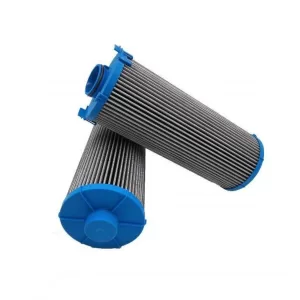
In 2025, the global hydraulic filter market is valued at approximately $1.55 billion; it is projected to grow to $2.69 billion by 2035, reflecting a Compound Annual Growth Rate (CAGR) of approximately 5.7% (Source: https://www.globalgrowthinsights.com/market-reports/hydraulic-filter-market-121047). This indicates a positive trajectory for market development. Given the harsh conditions inherent in mining operations, equipment reliability is paramount to profitability; even a single minute of unplanned downtime can result in financial losses. Consequently, while operators often meticulously maintain the major components of their excavators, they frequently overlook the critical role of safety filter elements. For mining operations that rely on brands such as XCMG, the 800175538 XCMG mining excavator safety filter element is an indispensable component for ensuring continuous equipment operation and maximizing operational uptime.
1. The Uncompromising Role: Your Hydraulic System’s Last Line of Defense
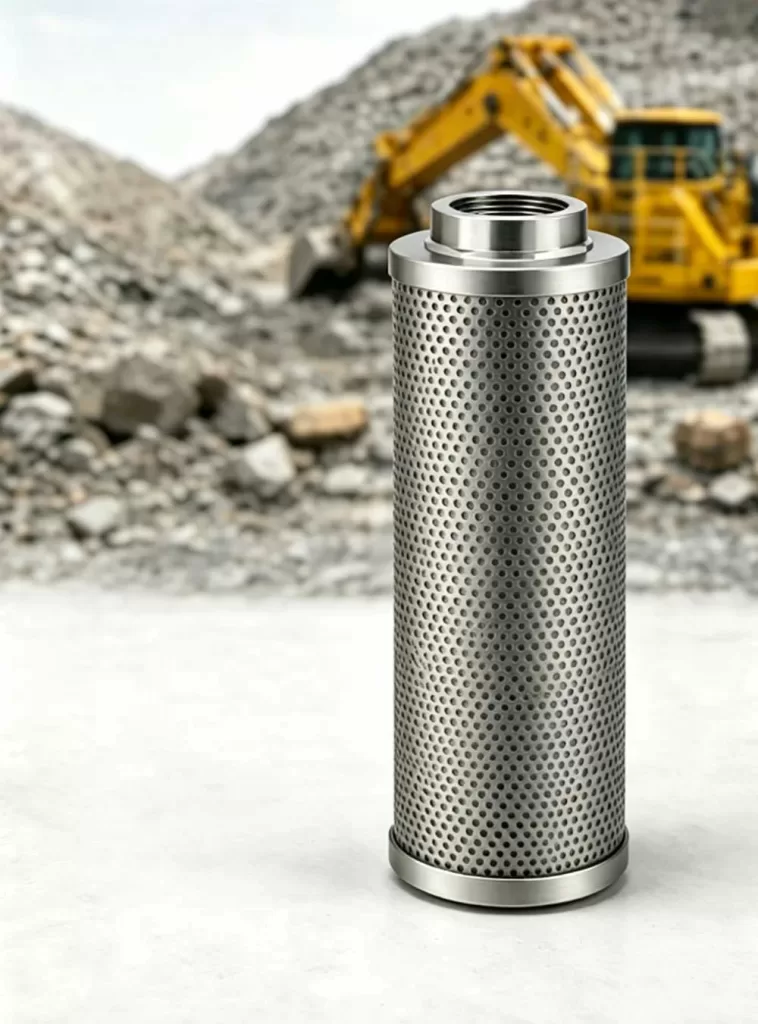
Think of your excavator’s hydraulic system as its circulatory system. Contaminants—dust, metal shavings, wear debris—are its silent killers. While primary filters do the heavy lifting, the safety filter is the ultimate fail-safe. Its sole purpose is to capture any contaminants that bypass or challenge the primary filtration stage, providing a final, critical barrier to protect high-value components like servo valves and piston pumps.
For a construction equipment parts supplier, recommending a genuine, high-specification safety filter isn’t an upsell; it’s a duty of care. The 800175538 is engineered to be that final, reliable barrier, ensuring that even under extreme conditions, protection doesn’t falter.
2. Beyond Basic Filtration: A Comparison of Critical Excavator Components
| Component | Primary Role | Typical Filtration | Key Limitation |
| Suction Strainer | Stops large debris during intake. | 100 μm+ (very coarse) | Basic protection; does not protect against fine, abrasive particles. |
| Main/Return Line Filter | Continuous bulk contaminant removal. | 10-20 μm (nominal) | Can experience bypass under pressure spikes or if clogged. |
| Safety Filter (800175538) | Absolute, final-stage protection. | 5 μm (absolute) | Designed not to bypass; the system’s last defense before critical components. |
This distinction is crucial. A generic replacement might fit, but without the 5 μm absolute rating and robust construction of true XCMG excavator parts like the 800175538, it cannot perform this fail-safe function effectively, risking the entire hydraulic system.
Unique Advantages
1. Superior Filtration Performance
The 800175538 filter element boasts an impressive filtration performance. It has a filtration precision of 5 μm (absolute value), with a β10≥1000 (ISO 16889-2008 real-world test). This means it can effectively intercept 99.99% of impurities in the 1-5 μm range and 100% of those in the 5-10 μm range. In laboratory simulations of mining conditions, it can filter 80-120 liters of oil per hour and remain unclogged for 720 hours of continuous operation, with a stable flow decay rate of less than 8%. This high-precision filtration ensures that the hydraulic fluid remains clean, reducing the risk of component damage.
2. Excellent Mechanical and Pressure Resistance
In the harsh mining environment, the filter element is subjected to high pressure and frequent vibrations. The 800175538 has a rated working pressure of 1.6 MPa and can withstand a maximum pressure of 4.0 MPa (with a burst pressure test result of ≥6.0 MPa without leakage or deformation). The filter shell has a tensile strength of ≥420 MPa and a compressive strength of ≥380 MPa, allowing it to withstand the frequent impact vibrations (10-50 Hz vibration test for 1000 hours without damage) in underground mines.
3. Wide Environmental Adaptability
Mining operations often take place in extreme environments. This filter element can operate in a temperature range of-40 ℃ to 120 ℃. It shows no brittleness or seal failure at-40 ℃ in low-temperature tests and maintains a filtration efficiency of over 98% at 120 ℃ in high-temperature tests. It also passes the neutral salt spray test (ISO 9227-2017) for over 2000 hours without significant rust, making it suitable for high-dust, high-humidity, and high-corrosion mining conditions. With a waterproof rating of IP67, it can resist water and dust intrusion in underground mines.
4. Long Service Life and High Reliability
In actual mining hard-rock conditions, the service life of the 800175538 is over 3500 hours, which is 65% longer than that of ordinary safety filter elements in the industry. It has a dirt-holding capacity of ≥120 g, far exceeding the industry average of 80g. Its Mean Time Between Failures (MTBF) is ≥3200 hours, with a failure rate of ≤0.3%, enabling it to meet the 24-hour continuous operation requirements of mines.
5. Convenient Installation and Maintenance
The filter element has an outer diameter of Φ110 mm, a length of 380 mm, and an interface thread of M27×2. It fits the filter seat with a clearance of ≤0.15 mm and has an installation positioning tolerance of ±0.08 mm. It is compatible with a quick-release structure, and a single replacement takes less than 3 minutes without the need for special tools, allowing for one-person operation.
| Category | Specification | Value |
| Dimensions and Interface | Outer diameter | Φ110 mm |
| Length | 380 mm | |
| Interface thread | M27×2 | |
| Performance Parameters | Filtration precision | 5 μm (absolute value) |
| Rated working pressure | 1.6 MPa | |
| Maximum withstand pressure | 4.0 MPa | |
| Temperature range | -40 ℃ to 120 ℃ | |
| Dirt-holding capacity | ≥120 g | |
| MTBF | ≥3200 hours |
Certification Standards
The XCMG excavator parts has passed a series of international and industry certifications:
- International Standards: ISO 16889:2008, ISO 2941:2017, CE certification (2006/42/EC mechanical directive, certificate number: CE-2025-FILTER-7632), ANSI/SAE J1940-2020.
- Domestic Standards: GB/T 20080-2017, JB/T 10910-2010, GB/Z 44946-2024, MA certification (certificate number: MAG20250387).
- Quality and Environmental Certifications: ISO 9001:2015 (certificate number: ISO9001-2025-0876), RoHS 2.0, REACH, with a filter material recyclability rate of ≥85%.
- Explosion-Proof and Safety Certifications: Exd (ib) IMb explosion-proof certification, suitable for gas and coal dust explosion-hazardous environments, and compliant with ZLF127 (A) explosion-proof electrical control requirements.
Core Component Technology
1. Composite Filter Material Formula and Structure
The filter element uses a composite filter material consisting of 316 L stainless steel sintered filter material, imported glass fiber, and cellulose in a layered structure. The filter material formula is enhanced with 0.2-0.3% molybdenum and 0.1-0.2% rare earth elements. It is formed through powder pressing (at 120 MPa) and high-temperature sintering (at 1200 ℃), creating a uniform three-dimensional network pore structure with a porosity of 45-55%. This structure ensures high-precision filtration while reducing fluid resistance, and the dirt-holding capacity is more than twice that of a single filter material. The filter has three layers: a coarse-filtration layer on the surface (intercepting impurities above 10 μm), a fine-filtration layer in the middle (intercepting 5-10 μm impurities), and a security-filtration layer inside (intercepting 1-5 μm fine impurities), achieving graded filtration and deep purification.
2. Shell and Sealing Technology
The filter shell is cold-forged from low-carbon alloy steel and undergoes quenching at 1050 ℃ and tempering at 580 ℃. Its surface is coated with a double-layer anti-corrosion coating of “electrophoresis + fluorocarbon paint” with a thickness of 80-100 μm, providing a salt spray corrosion resistance time of over 2000 hours. The sealing parts are made of special fluororubber (FKM), which maintains an elasticity retention rate of ≥85% in the temperature range of-40 ℃ to 120 ℃ and can withstand a sealing pressure of ≥4.0 MPa without leakage. The labyrinth-type sealing structure, combined with anti-loose locks, effectively prevents dust and moisture from entering the filter element, ensuring the filtration effect and avoiding equipment failures caused by sealing failures.
3. Safety Protection and Regeneration Design
The filter element is equipped with a built-in differential pressure alarm device. When the filter is clogged and the differential pressure between the inlet and outlet reaches ≥0.3 MPa, it automatically triggers an alarm signal, reminding the staff to replace the filter in a timely manner. This prevents insufficient oil flow and excessive system pressure due to filter clogging, protecting core components such as hydraulic pumps and engines. The filter element has a back-flushable design and can be reused 2-3 times through high-pressure gas back-blowing or chemical cleaning, significantly reducing usage costs. It is also compatible with Modbus RTU 485 communication, allowing for remote reading of differential pressure and operating status data and supporting remote monitoring and early warning.
Major Application Scenarios
1. Large–scale Open–pit Coal Mines
In large-scale open-pit coal mines, which account for 45% of the application, the filter element is mainly used for filtering the hydraulic and fuel systems of excavators. It can withstand the high-dust and high-humidity conditions underground, protecting the equipment from the erosion of coal dust and rock powder and ensuring the continuous operation of comprehensive mining. According to China Coal data, the demand for filter elements in such mining scenarios accounts for more than 35% of the total demand for mining filter elements.
2. Metal Mines (Copper, Iron, Gold)
Metal mines, accounting for 38% of the application, use this filter element for oil purification in hard-rock excavation conditions. It intercepts metal shavings and rock dust, preventing hydraulic system blockages and engine wear, meeting the heavy-duty operation requirements of large-scale mining excavators.
3. Non–metallic Mines (Limestone, Granite)
Non-metallic mines, accounting for 12% of the application, use it for oil filtration in ore excavation and crushing auxiliary operations. It is suitable for high-abrasive dust conditions, extending equipment life and reducing maintenance costs, meeting the needs of large-scale non-metallic mine exploitation.
Case Study: A Large–scale Open–pit Coal Mine in Shanxi
A large-scale open-pit coal mine in Shanxi had 20 XCMG XE7000E mining excavators. Originally, they used ordinary safety filter elements. Due to the high-dust conditions in the mine, the average lifespan of the filter elements was only 1200 hours, and they needed to replace 18-20 filter elements per month. The frequent replacements resulted in a cumulative equipment downtime of 80 hours per month, and impurities penetrating the filter elements caused hydraulic pump wear, with annual maintenance costs exceeding 2 million yuan. After switching to the 800175538 XCMG excavator parts, the lifespan of a single filter element increased to 3600 hours, and the number of monthly replacements dropped to 3-4. The equipment downtime was reduced by 70 hours per month, and the failure rate of hydraulic pump wear dropped to 0. The annual savings in parts and maintenance costs were 1.56 million yuan, fully meeting the mine’s 24-hour continuous heavy-duty operation requirements and receiving high recognition from the customer.
Frequently Asked Questions (FAQs)
1. Q: Oil leakage occurs after the filter element is installed. What are the possible causes and solutions?
A: ① Check if the seals are seated correctly; if any are missing or damaged, replace them with specialized fluororubber seals. ② Inspect the clearance between the filter element and the filter housing; if the gap exceeds 0.15 mm, replace either the filter housing or the filter element. ③ Verify the installation torque (standard torque: 35 N·m); if the torque is insufficient, retighten the assembly to prevent loosening that could lead to leakage. ④ If operating in a high-humidity underground environment, check the seals for signs of corrosion and promptly replace them with corrosion-resistant seals if necessary.
2. Q: The differential pressure alarm triggers frequently during filter element operation. How should this be addressed?
A: ① Check if the filter element is clogged; if the pressure differential between the inlet and outlet reaches or exceeds 0.3 MPa, perform a backflushing regeneration procedure (using 0.8 MPa high-pressure gas for back-blowing, or soaking in a specialized cleaning fluid followed by rinsing). If the alarm persists after regeneration, replace the filter element immediately. ② Assess the dust concentration in the mining operation environment; if dust levels are excessively high, install a pre-filter dust cover to reduce clogging of the main filter element. ③ Check the condition of the hydraulic fluid; if the fluid has deteriorated or contains excessive impurities, replace the fluid to prevent accelerated clogging of the filter element.
3. Q: The filter element is prone to brittle cracking in low-temperature environments. How can this be prevented?
A: ① Select the specialized low-temperature-adapted filter element (Model 800175538), which features filter media and a housing that have undergone low-temperature modification treatments. ② Before commencing operations, preheat the equipment for 15–20 minutes to raise the temperature of the filter element and prevent thermal shock caused by extreme cold. ③ Avoid prolonged operation in extreme low-temperature environments (below -40 °C); if such operation is unavoidable, install an electric trace heating device on the filter element housing. ④ Periodically inspect the filter element housing for cracks; if any are detected, replace the unit immediately to prevent failure due to brittle fracture.
4. Q: How can one determine when a filter element has reached the end of its service life and requires replacement?
A: ① The differential pressure alarm device triggers continuously, and the system fails to return to normal operation even after backflushing. ② The filter element has accumulated 3,500 hours of service time (for high-dust mining environments, this interval may be appropriately shortened to 3,000 hours). ③ The filtration flow rate has dropped significantly (by 20% or more), or the pressure within the equipment’s hydraulic system has risen abnormally. ④ If the filter element housing shows signs of damage or corrosion, or if the seals have failed, resulting in leakage; ⑤ or if the fluid contains visible metal debris or impurities, indicating a significant decline in filtration efficiency—should any of these conditions be met, the filter element must be replaced immediately.
5. Q: Which mining excavator models are compatible with this filter element?
A: It is compatible with large-scale mining excavators such as the XCMG XE7000E and XE9000; SANY SY950H and SY1250H; Caterpillar 6090 and 349D; and Komatsu PC8000. Its interface dimensions are universal across filter bases from mainstream brands, allowing for direct replacement. Additionally, it is suitable for use in compressed air filtration systems within underground coal mines; for specific compatibility confirmation, please provide the equipment model and fluid type.
Conclusion
In conclusion, the 800175538 XCMG Mining Excavator Safety Filter Element is a high-quality excavator parts that offers numerous advantages in terms of filtration performance, durability, and adaptability. As a reliable construction equipment parts supplier, providing such high-performance components is essential for ensuring the efficient and reliable operation of construction and mining equipment.