When maintaining a fleet of heavy equipment, every component decision directly impacts uptime and operating cost. For mining excavators working around the clock in harsh conditions, the fuel filter is far more than a consumable — it is the first line of defense for the high-pressure common rail engine.
Choosing between a genuine OEM fuel filter and a lower-cost aftermarket alternative can mean the difference between thousands of hours of trouble-free operation and repeated, expensive injector failures. This article examines what really sets the two apart and why that choice matters so much for your excavator engine.
Why Fuel Filter Quality Matters More in Mining Excavators
In most mining sites, especially open-pit coal and quarry operations, fuel system problems rarely originate from the engine itself. Instead, they are typically caused by contamination that develops throughout fuel storage, handling, and transfer in harsh site conditions. These environments generate high levels of dust and moisture, and fuel stored on site often contains abrasive particles, water, and sometimes biodiesel blends.
Modern excavator engines rely on high-pressure common rail systems operating at up to 1,600 bar, where even microscopic particles and water droplets can damage injector nozzles, disrupt spray patterns, and reduce combustion efficiency. A fuel filter that cannot maintain consistent high-efficiency filtration under these conditions exposes the entire fuel system to premature wear. This is why fuel filters are not interchangeable commodity parts — their performance must match real operating conditions. A filter that performs adequately in general construction work may fail quickly in mining applications, leading to power loss, higher fuel consumption, and unplanned downtime.
OEM vs Aftermarket Fuel Filters: Key Specification Differences
The comparison below summarizes the key performance differences between the XCMG 800153892 fuel filter and a representative aftermarket alternative, based on internal testing and field data.
| Comparison | OEM Fuel Filter (XCMG 800153892) | Typical Aftermarket Fuel Filter |
| Filtration Accuracy | 4µm rated, ≥99.5% efficiency (ISO 19438) | 4µm rated, often ≤92% efficiency |
| Water Separation | ≥99% emulsified water removal (ISO 4020) | Usually ≤90%, inconsistent performance |
| Burst Pressure | ≥20 bar | As low as 12 bar |
| Temperature Range | −40 °C to +120 °C | −25 °C to +100 °C |
| Compatibility | Exact fit, calibrated bypass valve (1.7 bar) | Generic sizing, unknown bypass settings |
| Quality Control | Certified to ISO, SAE, CE, RoHS, and factory standards | Limited or no independent certification |
5 Critical Factors to Compare When Choosing a Mining Excavator Fuel Filter
To better understand these differences, the following key performance factors explain how OEM and aftermarket filters perform under real mining conditions.
Filtration Efficiency and Micron Rating
When comparing fuel filters, don’t stop at the micron rating alone — a filter can claim “4 micron” and still perform very differently depending on how consistently it holds that rating under load. What matters is verified efficiency at that particle size. A genuine XCMG filter delivers 4µm filtration at ≥99.5% efficiency, tested to ISO 19438. The aftermarket sample XCMG evaluated, rated at the same 4µm level, reached only 92% — a gap wide enough to let a substantial volume of hard particles reach the high-pressure pump and injectors over the filter’s service life.
Water Separation Performance
Water is one of the most damaging contaminants in diesel fuel — free and emulsified water cause corrosion, reduce lubricity, and can create cavitation damage inside injector tips under high pressure. This is where separation efficiency becomes a real differentiator: the XCMG filter removes ≥99% of emulsified water, validated by ISO 4020 testing, while the aftermarket sample XCMG evaluated fell below 90%. Its hydrophobic-coated media also resists swelling and degradation on contact with water — a property that matters most in high-humidity mining regions and during rainy-season operations, when contamination risk rises sharply.
Service Life and Dirt-Holding Capacity
Filter change frequency has a direct impact on maintenance labor and uptime, especially on an excavator running 20 hours a day. Two figures are worth comparing here: dirt-holding capacity and rated service life. The OEM filter holds ≥120 g of contaminant — about 30% higher than many competing products — and is rated for 6,000 hours under heavy-duty conditions. In one documented mining deployment, the aftermarket filter it replaced needed changing every 3,000 hours, doubling maintenance interventions and raising the risk of dirt ingress during servicing.
Temperature Resistance and Structural Reliability
Mining excavators face extremes on both ends — starting in −40 °C winters and running continuously in +120 °C engine bay heat — and the filter has to hold up under all of it without failing structurally. The OEM element uses low-temperature-resistant glass fiber media that retains ≥90% toughness at −40 °C, while its silicone end-cap seals are tested to withstand 120 °C continuously for 72 hours without hardening or leaking. Its burst pressure, rated above 20 bar, means the element won’t collapse even under severe plugging. The aftermarket filter XCMG benchmarked covered a narrower window (−25 °C to +100 °C) with a burst rating as low as 12 bar — a meaningful gap in extreme climates.
Compatibility with High-Pressure Common Rail Engines
An excavator’s fuel system is engineered around specific flow characteristics, pressure drops, and bypass valve settings — details that matter more than they might seem. The genuine filter’s bypass valve is calibrated to open at 1.7 bar ±0.1, matched to XCMG’s mining excavator specifications. An aftermarket filter with an unverified bypass setting can open too early, sending unfiltered fuel around the element, or too late, starving the engine during cold starts — either way, a mismatch that’s difficult to diagnose and costly to repair.
Hidden Costs of Choosing Aftermarket Fuel Filters
The purchase price of a fuel filter represents only a small portion of its total operating cost. When a low-quality filter is installed, a chain of hidden expenses quickly begins to build up over time.
Take a real-world example from a large open-pit coal mine in Inner Mongolia. Eight XCMG XE600G excavators operating with non-genuine fuel filters experienced frequent injector clogging and repeated engine power loss. On average, each machine suffered around seven unplanned maintenance stoppages per month, with total monthly losses exceeding ¥45,000 per unit.
After switching to genuine XCMG 800153892 fuel filter elements, injector clogging incidents were eliminated, engine performance returned to normal, and service life extended from approximately 3,000 operating hours to 6,000 hours. As a result, monthly maintenance costs dropped to around ¥2,500 per machine, generating annual savings of more than ¥510,000 per excavator.
The hidden costs associated with aftermarket filters typically include:
- Unplanned downtime: Lost production hours while equipment is offline for repairs.
- Fuel injector and pump damage: A complete set of common rail injectors can be extremely expensive to replace, often far exceeding the cost of the filter many times over.
- Increased labour costs: More frequent replacements and emergency maintenance interventions.
- Higher fuel consumption: Poor injector performance leads to inefficient combustion and increased fuel burn per ton of material moved.
In practice, these costs scale rapidly across a fleet of machines, which is why many fleet operators evaluate fuel filters based on total lifecycle cost rather than initial purchase price alone.
XCMG 800153892 Fuel Filter: Mining Application Engineering Design
High-Efficiency Filtration Through Layered Media Design
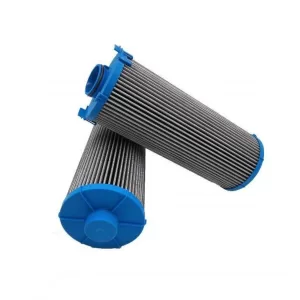
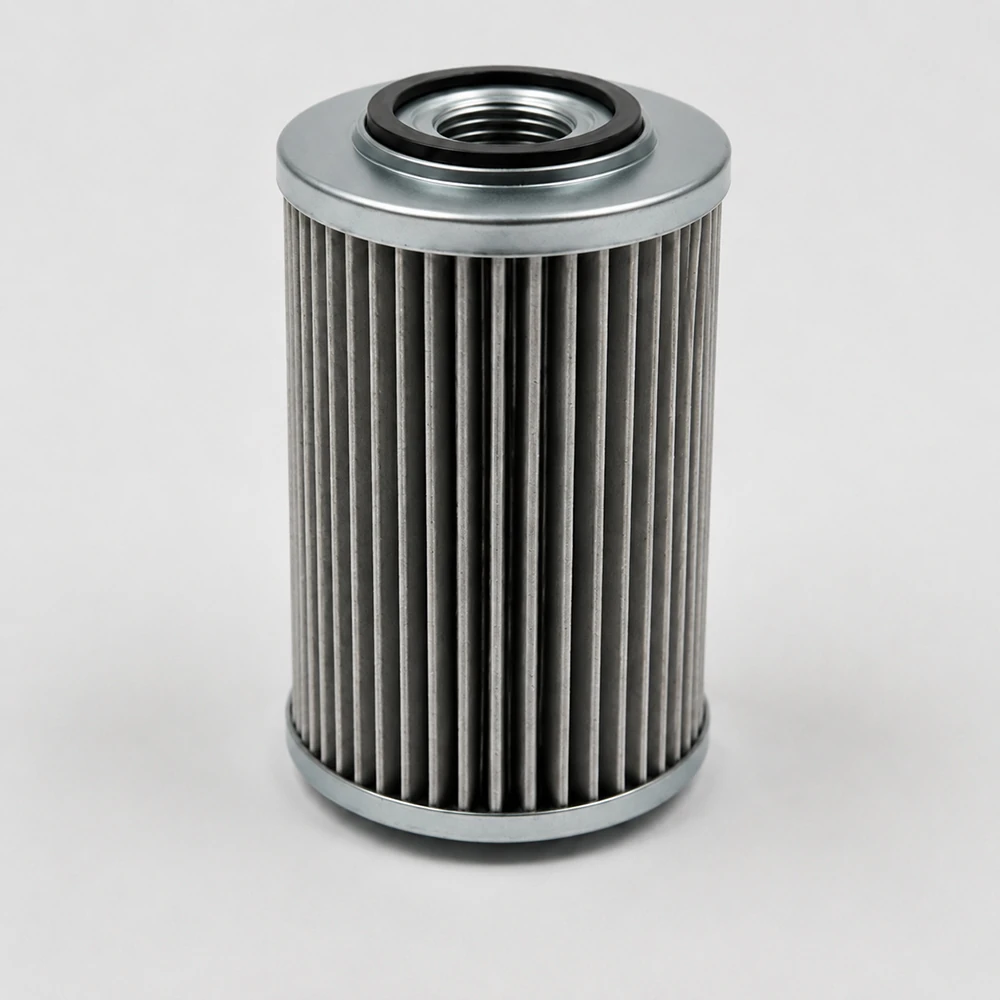
The filter media combines 70% glass fiber and 30% polyester fiber, heat-sintered into three functional layers: a 10-micron pre-filter layer that first intercepts coarse particulates, a 4-micron primary layer responsible for precision filtration, and a fluorocarbon-treated hydrophobic layer at the base that separates water while resisting media swelling on contact. This layered structure is spiral-wound with a 0.2mm layer spacing, which provides roughly 40% more filtration area compared to a flat-pleated design of the same physical size. As a result, dirt-holding capacity is significantly increased, allowing the element to maintain stable performance and support a full 6,000-hour service interval even under high-dust mining conditions.
Certified Manufacturing and Quality Control Standards
The 800153892 fuel filter is manufactured in accordance with multiple international standards, including ISO 4548-12, ISO 19438, ISO 4020, SAE J1124, CE, and RoHS, as well as XCMG’s internal mining-focused engineering standards. Each production batch is subjected to strict quality control and testing procedures to ensure consistent performance and manufacturing stability, providing a level of validation and reliability that is often not matched by aftermarket alternatives.
Structural Design for Extreme Mining Conditions
Key engineering features include a patented bypass valve calibrated to open at 1.7 bar, ensuring continuous fuel flow during cold starts or temporary clogging conditions without compromising filtration efficiency. The filter also uses a one-piece endcap secured through a high-strength thermal-fusion bonding process rated above 15 bar, which helps reduce the risk of bypass leakage under sustained vibration and pressure cycling in mining environments. It operates within a temperature range of −40 °C to +120 °C, has a burst pressure above 20 bar, and is available with an optional heating element for extremely cold operating conditions.
Engine Protection and System Reliability Benefits
Together, these specifications translate into measurable field performance, including stable flow resistance across the full duty cycle, consistent fuel cleanliness reaching the injectors, and a reduced frequency of unplanned maintenance interventions over the service life of the engine.
Frequently Asked Questions
Q1: Is an OEM fuel filter really worth the extra investment?
A: Yes, when total cost of ownership is considered. While the genuine XCMG 800153892 filter may have a higher unit price than some aftermarket options, its 6,000-hour life and superior protection result in a lower cost per operating hour. Compared to a premium foreign-brand filter that costs more but lasts only 4,000 hours, the XCMG filter’s hourly cost can be less than half. Over a fleet of ten excavators, the annual savings on filter purchases alone can exceed ¥130,000, without even counting avoided repairs and downtime.
Q2: Can an aftermarket fuel filter damage fuel injectors?
A: Yes. A filter with only 92% efficiency at 4µm — a level XCMG has measured in aftermarket samples — allows a significantly higher load of abrasive particles to reach the injectors. Combined with poor water separation, this accelerates nozzle erosion, distorts spray patterns, and can lead to catastrophic injector failure. Once injectors begin to fail, the entire common rail system is at risk, and repair costs escalate dramatically.
Q3: How often should a mining excavator fuel filter be replaced?
A: Under typical mining duty, the XCMG 800153892 fuel filter element is designed to last 6,000 hours. In lighter earthmoving applications, replacement intervals may be extended to around 8,000 hours. However, when operating with poor-quality fuel or in exceptionally dusty conditions, inspections are recommended after 4,000–5,000 hours. A differential pressure indicator can provide a reliable real-time signal that the filter is approaching the end of its service life.
Q4: How can I identify a genuine XCMG fuel filter?
A: Look for the official XCMG packaging with an anti-counterfeit QR code that can be scanned to verify authenticity. The filter body is clearly printed with the part number “800153892” and a production date. The filtration media appears uniform and cleanly wound, the sealing gasket is flexible and well-seated, and the overall build quality is noticeably higher than anonymous aftermarket copies. Always purchase from an authorized heavy machinery parts supplier to ensure you receive genuine XCMG excavator parts.
Conclusion
A fuel filter is much more than a simple screen. It is a precisely engineered safety device that guards the excavator engine against wear, corrosion, and catastrophic failure. For mining excavators working under extreme dust, temperature, and moisture conditions, selecting an OEM fuel filter — specifically engineered for that environment — translates directly into higher uptime, longer injector and pump life, and substantially lower long-term maintenance costs.
Genuine XCMG excavator parts like the 800153892 fuel filter element bring together micron-level filtration, reliable water separation, extended service intervals, and robust structural design that aftermarket alternatives simply cannot match. When sourcing construction equipment parts for your fleet, partnering with a knowledgeable heavy machinery parts supplier and insisting on factory-engineered components is one of the smartest investments you can make in the health of your excavator engines and the productivity of your operation.