
We’re happy to help you find the best option for your application.
Applicable Engines:
Equipment:
Typical Location:
1. Cleaning: Thoroughly clean the cylinder block flange surface and oil pan sealing groove to remove oil, metal shavings, and old gasket residue. Keep the surface dry and clean to prevent impurities from affecting the sealing effect.
2. Inspection: The new gasket should be free from damage, aging, and deformation, and its size should perfectly match the sealing groove. Check the cylinder block and oil pan mounting surfaces for warping and burrs.
3. Installation: Smoothly fit the gasket into the sealing groove, without twisting or flipping. A thin layer of clean engine oil or special sealant can be applied to both sides of the gasket (do not apply excessively) to aid sealing.
4. Tightening: Tighten the oil pan bolts in a crisscross pattern, in 2-3 stages, to 25-35 N·m, ensuring even pressure on the gasket and avoiding localized compression damage.
5. Leak Detection: After adding engine oil, let the engine idle for 5-10 minutes. Check the mating surfaces for leaks and ensure the oil level is normal.
6. Maintenance: Check the condition of the gasket every time you change the engine oil. Replace the gasket with C4934344 during engine overhaul. Regularly clean the exterior of the oil pan to promptly detect potential leaks.

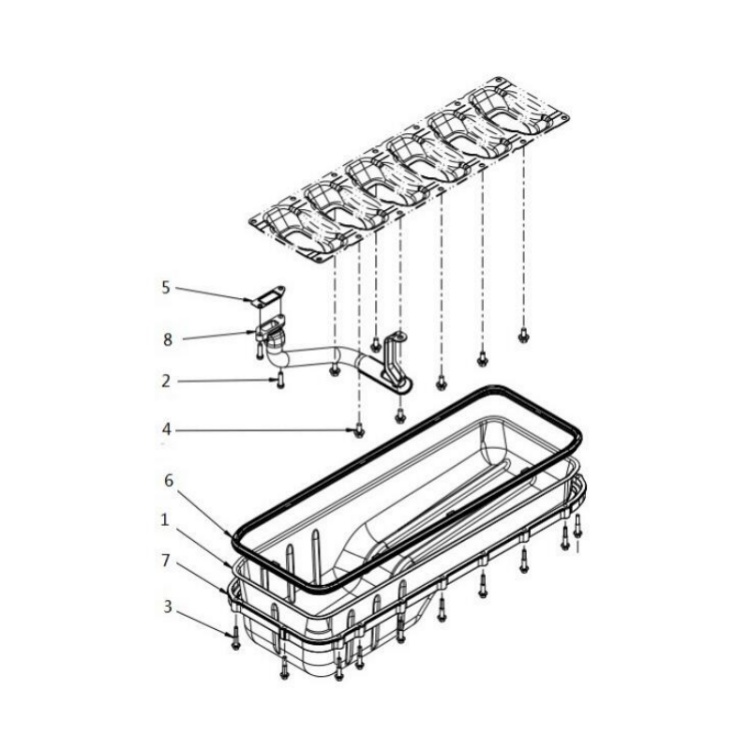
1 C2831341 Oil Pan
2 C3025806 Hex Socket Head Bolt
3 C3901445 Hex Flange Bolt
4 C3903990 Hex Flange Bolt
5 C4898301 Oil Suction Pipe Gasket
6 C4934344 Oil Pan Gasket
7 C4938655 Oil Pan Mounting Plate
8 C5274750 Oil Suction Pipe
*For other spare parts procurement needs, please contact us!