
Applicable Engines
– Cummins: 4B3.9, 6BT5.9, 6CT8.3, ISB4.5/6.7, ISDe, ISLe, QSB6.7, KTA19 Series
– DCEC: ISDe, ISBe, 6CT8.3, ISZ13, EQ1120GA applicable models (suitable for engines supporting Tianlong, Tianjin, Dali Shen and other models)
Equipment
– Construction Machinery: Medium and large excavators, loaders, mining excavators, mining trucks, rotary drilling rigs, crawler cranes (equipped with Cummins 3.9L/5.9L/8.3L/19L models), suitable for Komatsu R385-9 excavators, XCMG XR220/XR260 rotary drilling rigs and other equipment
– Commercial Vehicles: Medium and heavy-duty trucks such as Dongfeng Tianjin, Tianlong, Foton Auman, Shaanxi Automobile Delong (equipped with Cummins applicable models)
– Gensets: 50~400kW Cummins 4B/6B/6CT/QSB/KTA19 series diesel units
– Industrial Equipment: Air compressors, marine auxiliary engines, oilfield drilling machinery, mining machinery (equipped with Cummins medium and heavy-duty engines)
Installation Location
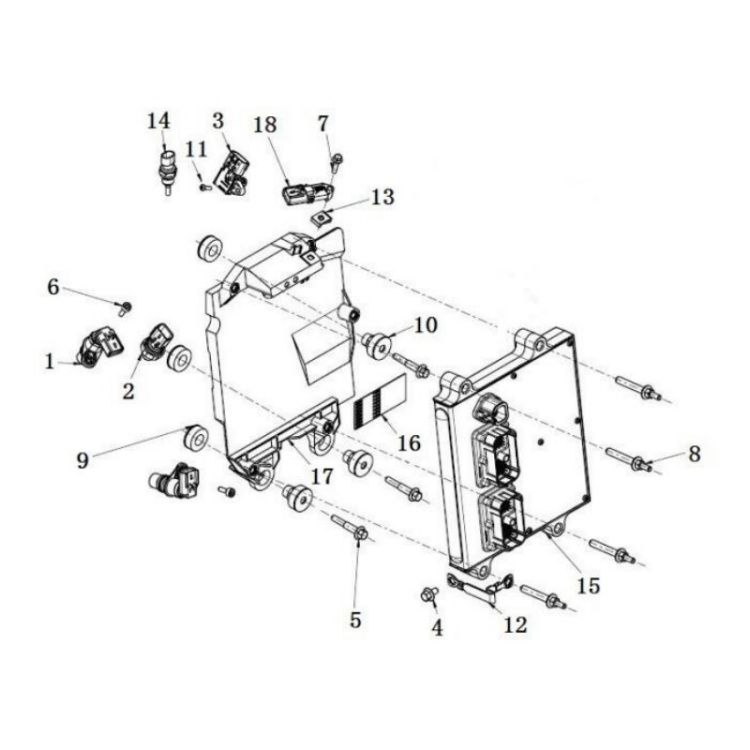
Installed at the connection between the engine bracket and the frame, between the engine block and the base, and partially adapted to the generator bracket and exhaust pipe bracket. It is fixed on the bracket mounting surface with bolts to ensure that the vibration damping block is closely attached to the mounting surface without gaps or tilting. The installation position should avoid the area directly baked by the high-temperature exhaust pipe and be away from sharp components to prevent rubber aging or damage.
Installation & Maintenance
1. Clean: Thoroughly clean the surface of the mounting bracket and the mounting surface of the vibration damping block from oil, iron chips, dust and residual old sealant to ensure the mounting surface is flat and clean, avoiding impurities affecting the fit and vibration damping effect.
2. Inspect: The new vibration damping block has no damage, cracks or bulges, the rubber has no aging or degumming, and the embedded steel plate has no rust or deformation; verify that the model of the vibration damping block matches the engine model and installation position, and check that the fixing bolts have no sliding teeth or rust.
3. Install: Align the vibration damping block with the mounting hole, place it stably on the mounting surface to ensure accurate positioning and no deviation; insert the fixing bolt and tighten it evenly to avoid deformation of the vibration damping block or installation tilting due to excessive force on one side.
4. Torque: Tighten the fixing bolt to 18~25N·m in 2 steps to ensure the vibration damping block is firmly installed without looseness or shaking, and the fitting surface has no gaps, avoiding bolt loosening or vibration damping block displacement caused by engine vibration.
5. Re-inspect: Start the engine, observe that the vibration damping block has no abnormal deformation or falling off, the vibration is significantly reduced during operation, and there is no abnormal noise; check that the installation part has no looseness and confirm that the vibration damping effect meets the requirements.
6. Maintenance: During each engine maintenance or regular maintenance, check the rubber state of the vibration damping block. If aging, cracking, degumming, bulging and other conditions occur, replace the C3955219 genuine part in time; check the tightness of the fixing bolts and tighten them in time if they are loose; clean the oil and dust on the surface of the vibration damping block to avoid long-term oil erosion of the rubber and shorten the service life.